
Firenze, dicembre 2019. In maniera del tutto improvvisa e inaspettata, mi si presenta l’opportunità di incontrare un giovanissimo artista. Ci diamo appuntamento in un bar vicino alla stazione, per comodità: è infatti in partenza dopo appena un paio d’ore.
Quando arrivo, Hudson Heil è già seduto dentro il locale. È puntuale, mi dico – guadagna già qualche punto per questo. Mi accoglie con un sorriso che rivela tutta la freschezza dei suoi diciotto anni, ed una stretta di mano ferma che lascia invece intuire una determinazione che non tutti alla sua età ancora hanno. Scoprirò nella successiva ora e mezza che entrambe le cose sono vere: Hudson è un ragazzo pieno di sogni ma anche con una precisa visione del mondo e della società in cui vive. Ci sediamo. Noto per terra, accanto a lui, un grande zaino. Hudson è nato ad Homer, una cittadina in Alaska (un’informazione più importante di quanto si possa credere, come vedremo), e quello zaino è l’unico bagaglio del suo viaggio itinerante per l’Europa. Un viaggio che, mi spiega, sta facendo per conoscere nuove realtà e nuove persone, in campo artistico ma non solo, che possano arricchire la sua visione della vita e dell’arte. Il viaggio che almeno una volta nella vita dovremmo fare tutti, mi viene da pensare.
Florence, December 2019. Suddenly and unexpectedly, I have the opportunity to meet a very young artist. We meet in a bar near the station, for convenience: he is in fact leaving after just a couple of hours. When I get there, Hudson Heil is already sitting inside the cafe. He’s punctual, I tell myself – already earns some points for this. He welcomes me with a smile that reveals all the freshness of his eighteen years, and a firm handshake that instead lets us guess a determination that not everyone at his age still has. In the next hour and a half I will discover that both are true: Hudson is a boy full of dreams but also with a precise vision of the world and the society in which he lives. We sit down. I see a large backpack lying on the ground next to him. Hudson was born in Homer, a small town in Alaska (more important than you might think, as we will see), and that backpack is the only baggage of his traveling trip to Europe. A journey that, he explains, he is taking to get to know new realities and new people, in the artistic field but not only, who can enrich his vision of life and art. The journey that we should all take at least once in our lives, I think to myself.
Quando hai iniziato ad approcciarti all’arte? Dipingevi o disegnavi già da bambino? Quando ero piccolo ho iniziato a fare qualcosa, ma non era ancora una vera passione. Poi, qualche anno fa, dipingere è diventato un modo per comprendere le cose attorno a me e dentro di me; un po’ come vedere un terapista. Era un sollievo. Io ho la mia interpretazione e la mia personale connessione con le cose, ma gli altri possono interpretarle in modo completamente diverso. Hanno la loro visione. E per filtrare la propria visione del mondo si possono fare tante cose: arte, musica, danza…sono come dei mediatori fra noi ed il mondo. Credo sia molto importante che ognuno trovi il proprio mezzo espressivo.
When did you start to approach art? Did you also paint when you were a child? A little bit, but I was not passionate at it. A several years ago painting became a way to understand things around me, to stripping instead of seeing a therapist. It was a release. I have my own interpretation and my personal connection to things, but others can interpret them completely differently. There’s a lot of things that can do it: art, music, dance…it’s a mediator for that. I think that’s really important.
Qual è stato il tuo percorso? Hai studiato arte a scuola? No, non ho studiato arte, non ho avuto una vera e propria formazione in questo senso. È proprio quello che sto cercando di decidere adesso, per l’università. Per il momento sto facendo tantissima pratica.
What’s your training? Did you study art at school? No, I didn’t taken art class. So I haven’t any proper training. This is what I’m trying to decide right now, for the university. I’m doing a lot of practice.
Quindi sei un autodidatta. Non è così ovvio, guardando i tuoi lavori. Ti ringrazio. Soprattutto per quanto riguarda le parti più figurative cerco di sperimentare il più possibile, così da potermi sempre migliorare. Proprio ieri sera ho incontrato alcune persone dell’ambiente e ho fatto vedere loro i miei lavori…pongo sempre molta attenzione al modo in cui la gente reagisce. Mi affascina davvero soffermarmi su come gli altri rispondono, cosa dicono, anche in situazioni non strettamente legate all’arte. Anche quello che altri artisti vedono nella mia arte: è qualcosa che la arricchisce sempre.
So you’re a self-taught. It’s not so obvious, looking at your works. Thank you. Especially for the figures, I try to experiment as much as I can, so I can grow. Last night I met some people of the environment and I showed them my work and…I always put my attention on the reaction of the people. It really fascinates me how people interact, what they say, even in other situations. Also what other artists saw: it’s something that I think it’s help my art.
Quindi è importante per te trovare ispirazione non solo in altri artisti ma anche nella vita vera, nelle persone. Esatto. Questa è una delle ragioni per cui viaggio. Quando viaggio scrivo molto durante il giorno, scrivo di tutte le esperienze che faccio ed è importante per me quello che mi circonda. Scrivo cosa provo, cosa penso e cosa sto sperimentando, in modo da poter riflettere su questo quando dipingo.
So it’s important to you to find inspiration not only in other artists but also in real life, in people. Exactly. This is one of the reasons why I’m travelling. When I’m travelling i write a lot during the day, about all the experience and to me it’s important to see things around me. I write what I feel, what I thought, and what I’m experiencing so when I’ll paint I can reflect on that.
Quali sono i tuoi modelli di riferimento in arte? Non so se sbaglio, ma alcuni dei tuoi lavori mi hanno fatto pensare a Jean-Michel Basquiat. Sì, amo Basquiat. Quando ho iniziato a dipingere ho preso ispirazione da lui. Mi ha influenzato soprattutto per la sua mancanza di perfezione nelle proporzioni. Poi amo Picasso – ovviamente! – ma anche Matisse, Rembrandt, Rothko.
Who are your reference models in art? I don’t know if I’m wrong, but looking at some of your works I thought of Jean-Michel Basquiat. Yeah, I love Basquiat. When I started painting I took some inspiration from him. I don’t think Basquiat thought about proportions and perfection, that was an influence to me. I love Picasso – of course! – but also Matisse, Rembrandt, Rothko.
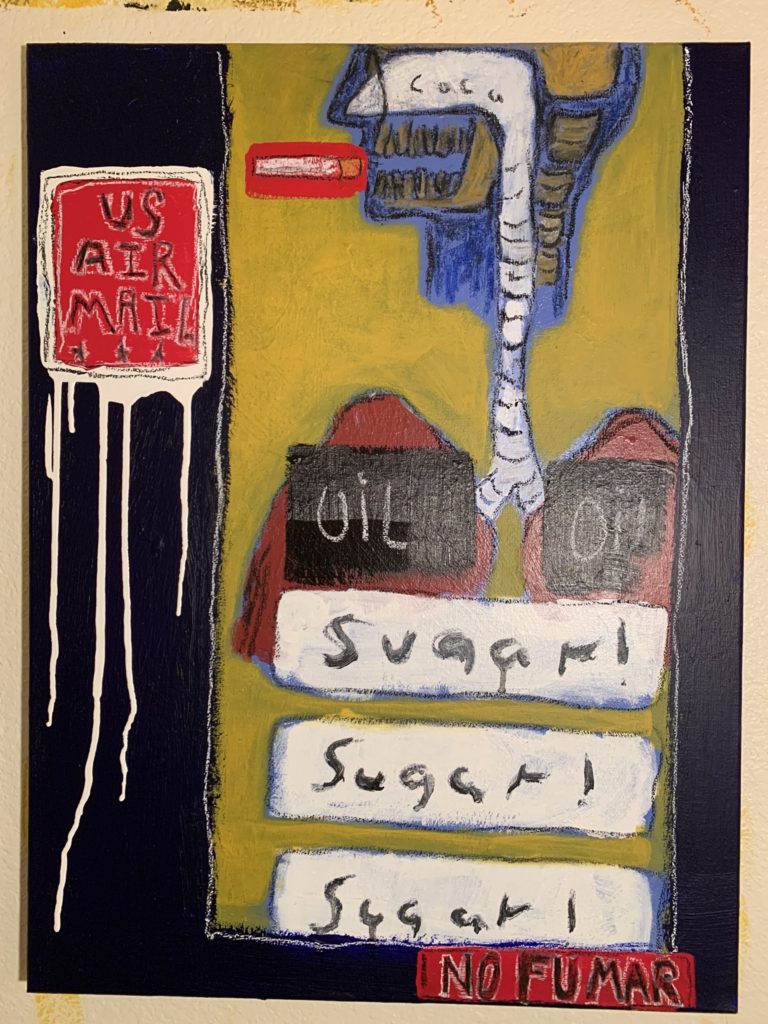
Rush. Colorado, USA August 2019.
Courtesy of the artist.
Sono tutti artisti che hanno lavorato molto sull’uso del colore…non è certo un caso. No, infatti. Credo che il colore sia di fondamentale importanza, e mi riferisco anche alle tante connessioni fra psicologia e arte. Non è tutto bianco o nero: i colori sono tutto ciò che c’è in mezzo. Ho realizzato qualcosa solo in bianco e nero, è un’opzione anche quella, certo. Ma i colori sono davvero importanti.
These are all artists who worked a lot with color…that’s not a coincidence for sure. No, it’s not. I think color it’s really important, returning to the psychological aspects in art. That’s not all black and white, colors are everything in between. I’ve done some stuff only in black and white, and it’s good, but colors are really important.
In alcuni dei tuoi lavori coesistono figure umane e fiori. Cosa rappresentano? I miei preferiti sono i girasoli…sin dall’infanzia, perché mia mamma li ama molto. Rappresentano l’equilibrio fra luce e oscurità, o meglio la luce nell’oscurità. Poi dipende anche dal tipo di fiori e dai colori; spesso scelgo fiori da poter rendere anche in forma più astratta, non sono mai perfetti come ad esempio le rose. Ho iniziato a dipingere due/tre anni fa (adesso ne ho diciotto), stavo seguendo un corso di psicologia e ho iniziato a cercare di combinare alcune cose della mia arte con concetti di psicologia, nel redigere il mio portfolio. Ho appreso che i colori possono avere diversi significati. Per esempio, le persone sono portate a credere che il giallo sia il colore della felicità, o il rosso quello della passione; ma il rosso è anche il colore della morte, della paura, del panico. È un colore davvero intenso e drammatico. Può anche rappresentare il senso di vuoto, l’assenza. Quindi con i girasoli cerco di introdurre questi concetti nella mia arte.
In some of your works there are human figures and flowers. What’s the meaning? My favourite are sunflowers…from childhood, because my mum loves sunflowers. The flowers represent the balance with lightness and darkness. Light into darkness. It depends on the type of flowers and the colors. Many times I choose abstract flowers, it’s never perfect like rose. I started painting two/three years ago (now I’m eighteen), I was doing a pshychology class and I tried to combine some things from there with my art for doing my portfolio. Colors can have different meanings. Many people think that yellow is the color of happiness, or red is the color of passion; but it’s also the color of death, fear, panic. It’s a really intense, dramatic color. It can also represents emptyness, absence. So with sunflowers I was trying to incorporate psychology in my art.
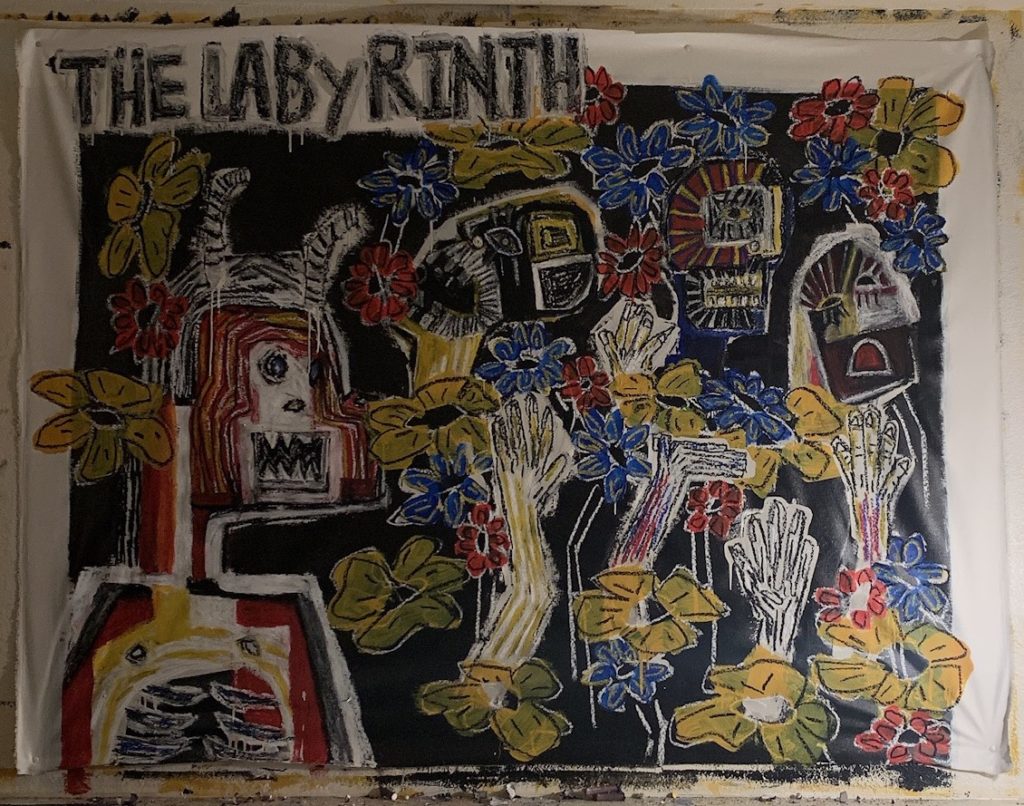
Bulls Sight. Colorado, USA August 2019.
Courtesy of the artist.
Come definiresti la tua arte? C’è una categoria alla quale fai riferimento, come la street art? Spazio fra molti stili. In alcuni dei miei primi lavori ci può essere una connessione con Basquiat. Ma se dovessi classificare il mio lavoro in generale e le cose più recenti che ho fatto, immagino che la risposta più giusta sia impressionismo. Dipingo semplicemente quello che sento, non seguo una struttura ben precisa, è sempre imprevedibile in un certo senso.
How would you define your art? There’s a cathegory you refer to, like street art? I jumped to many styles. In my early works it can be a connection with Basquiat. But if I’d have to classify my work in general, and the more recent suff, I guess maybe the answer is impressionism. I just paint what I feel, I’m not put the pieces in a certain way, so it’s always unpredictable.
Perché è sempre un processo. Sì, il processo è molto importante per me, a volte più del risultato. Dipingere è come costruire una casa: c’è una struttura dietro, grazie alle fondazioni. Ma anche il risultato ha la sua importanza, perché le persone guardano quello. Vedono un dipinto incredibile, ma non pensano a quanto duro lavoro ci sia dietro. Soprattutto negli Stati Uniti, l’apparenza conta molto. Siamo sempre molto esposti per questo.
Because it’s always a process. Yeah, the process it’s really important to me, sometimes more than the results. Painting it’s like building an house…there’s the structure from the foundations. But the risult is important too: people look at it. They see an incredible painting, but don’t really think about it, at how much effort takes to. Especially in the USA, the most important thing is the first impression. We are always exposed so much.
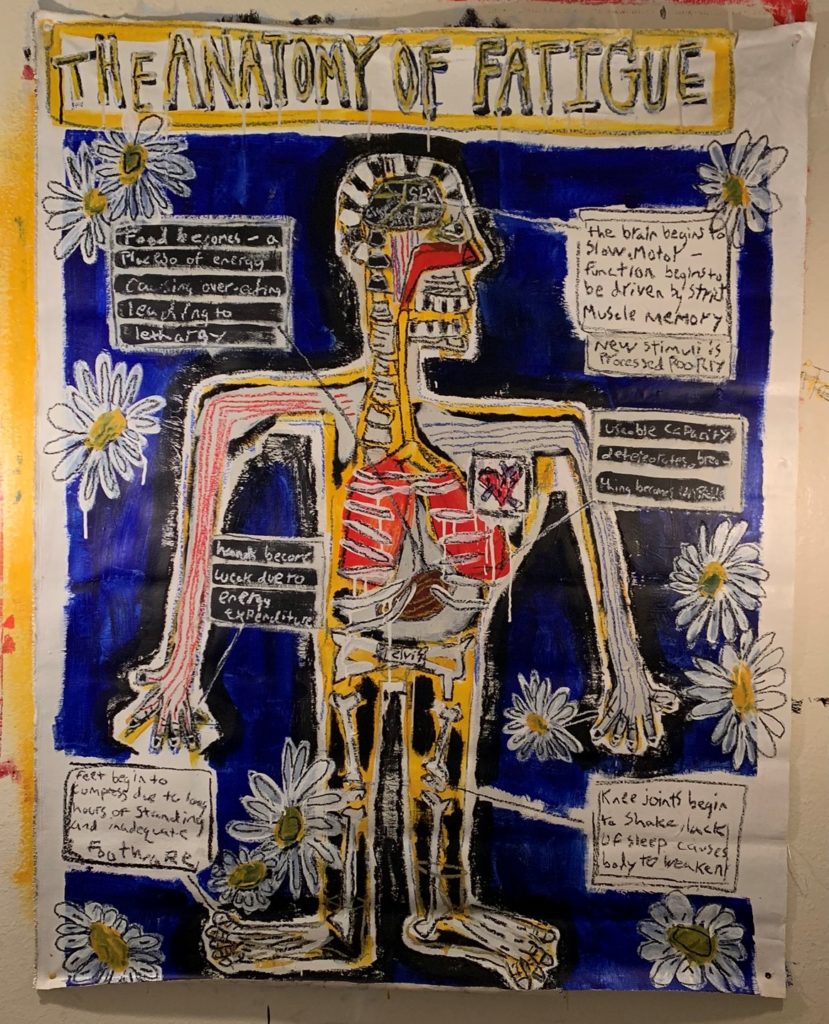
Fatigue. Colorado, USA August 2019.
Courtesy of the artist.
Credo sia un po’ come un iceberg: la gente ne vede solo la punta. Sì, esattamente. C’è così tanto oltre quello. Le persone non capiscono che l’arte non è solo quello che vedi, ma anche il processo che viene prima. Vorrei fossimo in grado di mostrare anche questo aspetto.
I think it’s like an iceberg: people only see the top of it. Yes, exactly. There’s so much more than it. People don’t understand that art it’s not only what you see, but also the process behind it. I wish we were able to show the process.
E quale potrebbe essere un modo per mostrarlo? Credi che sia compito dell’artista? Non è una cosa semplice, ma credo che l’artista dovrebbe trovare un modo per farlo. Ci sarebbe molta più comprensione se ci fosse una connessione fra l’artista e gli spettatori. Dovrebbe esserci un’interazione. È una cosa molto difficile da fare, perché molte persone non hanno il tempo o non vogliono trovare il tempo per farlo.
And what could be the way to show that? Do you think the artist should do this? It’s not easy to do, but I think the artist should find a way to do it. There would be better understanding if there was a connection between the artist and the viewers. There should be an interaction. It’s a difficult thing to do, because a lot of people don’t have the time or don’t make the time to do that.
Molto spesso dipende anche dall’esposizione, da come le opere sono presentate. Oh sì, indubbiamente. Sono stato in un museo di arte contemporanea a Berlino, in cui la presentazione era incredibile, qualcosa che non avevo mai visto prima. Si riusciva davvero a comprendere il processo creativo dietro le opere, si poteva come camminare attraverso la fatica dell’artista nel realizzarle. Ha cambiato il mio modo di vedere la cosa, soprattutto per la pittura contemporanea. Dipingere è sempre una sfida perché quando vuoi mostrare qualcosa non puoi usare dei veri oggetti.
Many times it also depends on the exhibition, how the artworks are exhibited. Oh yeah, definitely. I went to a contemporary art museum in Berlin, and the presentation of the artworks was incredible, something I had never seen. There you can really understand the process and achieve the understanding, you can walk through the effort. It changed my view, expecially in contemporary painting. Painting is always challenging because when you have to show something in an exhibition you can’t use real objects.
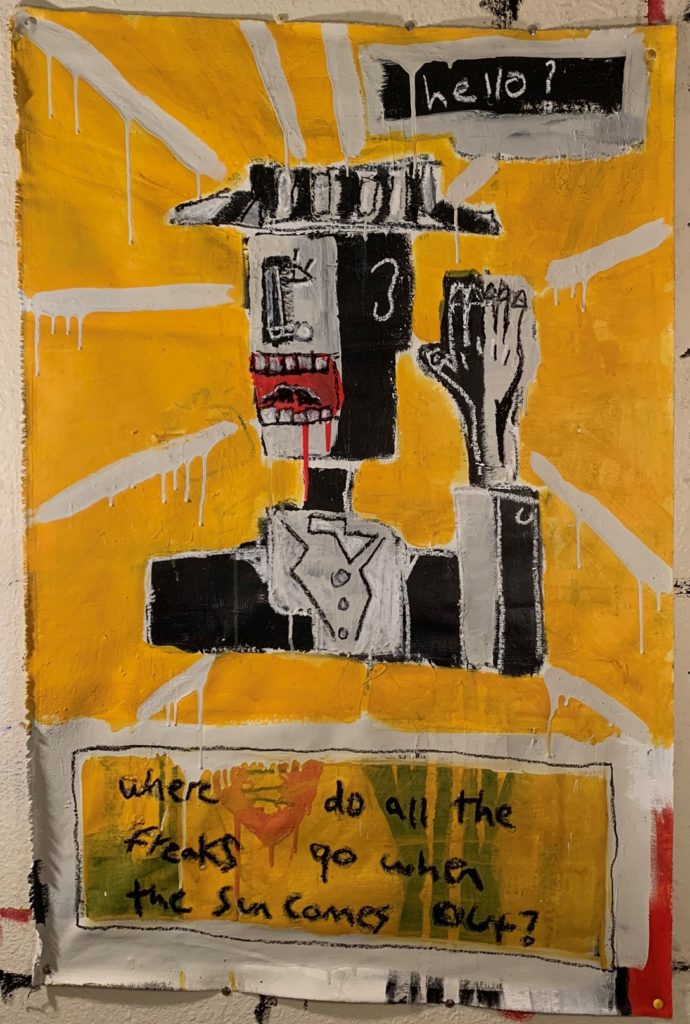
The Son. Colorado, USA August 2019.
Courtesy of the artist.
Diamo un’occhiata ad alcuni tuoi lavori, quelli più figurativi. Per quanto riguarda le figure umane, puoi dirmi qualcosa sulla disconnessione nei loro volti, e fra i volti e i corpi? Ha tutto a che fare con ciò che è scomodo. Soprattutto quando ho iniziato a dipingere, sentivo un’estrema dissociazione fra i miei pensieri ed il mio corpo, il modo in cui mi sentivo fisicamente. Avevo questa sensazione molto pesante. E quando la testa è disconnessa dal corpo, è perché c’è questa disconnessione fra i pensieri ed il corpo. A volte le figure non hanno le braccia, e questo rappresenta l’impossibilità di agire. Perché ci sono un sacco di cose che non possiamo controllare. Inoltre, nei miei lavori è sempre come se tutto fosse un autoritratto, anche le figure femminili lo sono.
Let’s take a look on some of your paintings, the more figurative ones. About the human figures, could you tell me something about the disconnection in the faces, and between faces and bodies? To me it’s all about uncomfortable. Especially when I started painting, I had time with an extreme dissociation where my toughts were totally apart from my body, about how I fisically feel. I had this really heavy feeling. And the head is disconnected from the body, because of the disconnection between the thoughts and the body. Sometimes these figures haven’t the arms, it represents the inability to act. There are a lot of things that we can’t control.Moreover, in my paintings it’s always like everything is a self portrait, even the female figures.
Sì, perché in realtà ognuno di noi ha dentro di sé una componente femminile ed una maschile. Non ha niente a che vedere con il genere. È esattamente quello che intendo.
Yes, because everyone of us have both female and male component, inside. It’s not about genre. That’s exactly what I mean.
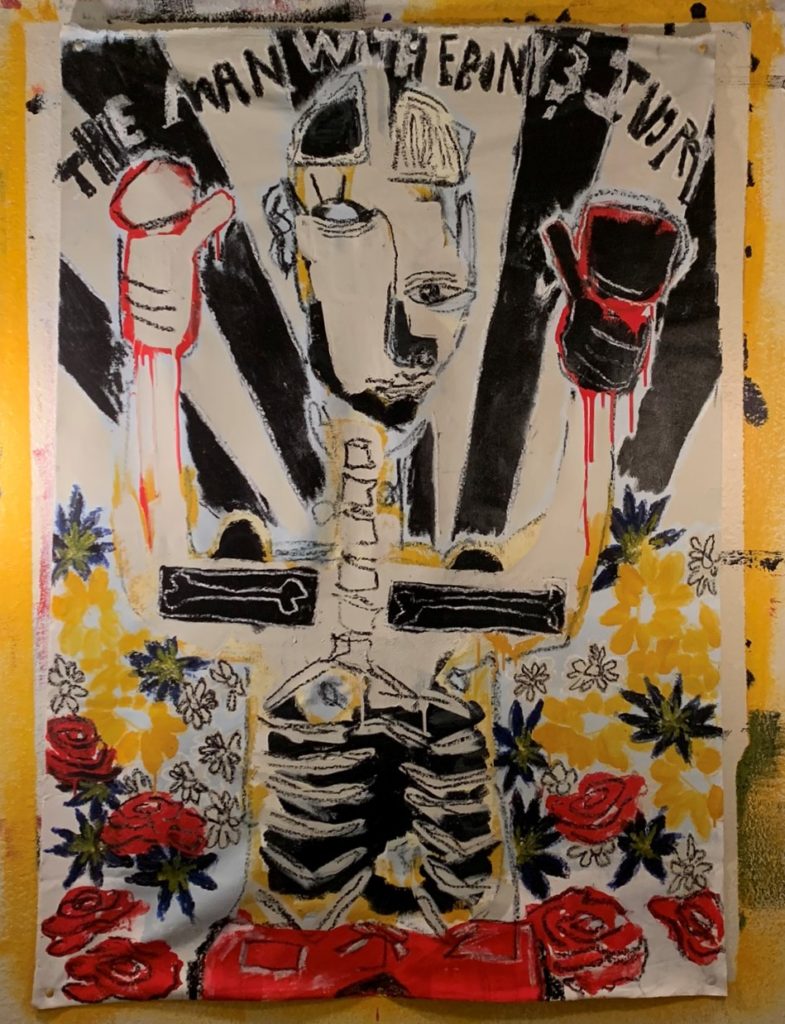
The Boxer. Colorado, USA August 2019.
Courtesy of the artist.
Parlami un po’ della tua tecnica. Uso molto i pastelli e gli acrilici, a volte colori a spray…quello che trovo. Lavoro molto sulla tela.
Tell me something about your technique. I use a lot of pastels and acrylic, some spray colors…whatever I find. I work a lot on canvas.
Ma a volte lavori anche sui muri, giusto? Street art vera e propria, in questo caso. Sì, soprattutto quando viaggio scrivo…di qualunque cosa! Lo faccio in forme diverse come poesia, domande filosofiche in un certo senso…ma non voglio farmi arrestare! Quindi scrivo con il gesso. [ndr. Nei suoi ultimi lavori di questo tipo, Hudson Heil non utilizza il gesso ma realizza delle locandine che poi affigge sui muri.]
But sometimes you also work on the walls, right? Properly street art. Yeah, especially when I’m travelling I write…about everything! I do it in different forms like poetry, philosophical questions I suppose… But I don’t want to be arrested! So I write with chalk. [ed. In his latest works of this type, Hudson Heil does not use chalk but creates posters which he then posts on the walls.]
…così che non si possa considerare vandalismo! Questo rende il lavoro temporaneo. Sì, non è permanente. Ho fatto alcuni lavori con i colori a spray, ma al momento preferisco il gesso perché non dura molto a lungo. Quindi le persone possono vederlo ma è temporaneo ed è questa la sua bellezza. Scrivo della mia esperienza personale ma anche qualcun altro ci si può relazionare. Penso si possa sempre trovare qualcosa con cui entrare in relazione, soprattutto nell’arte e nella scrittura.
…so that’s not vandalism! This makes the work temporary. Yeah, it’s not permanent. I’ve done some spray work, but the chalk is what I actually like, because it doesn’t last for so long. So the people can see it but it’s temporary and that’s the beauty of it. I write about my own experiences but someone else can also relate to it. I think we always find something to relate with, especially in art and in writing.
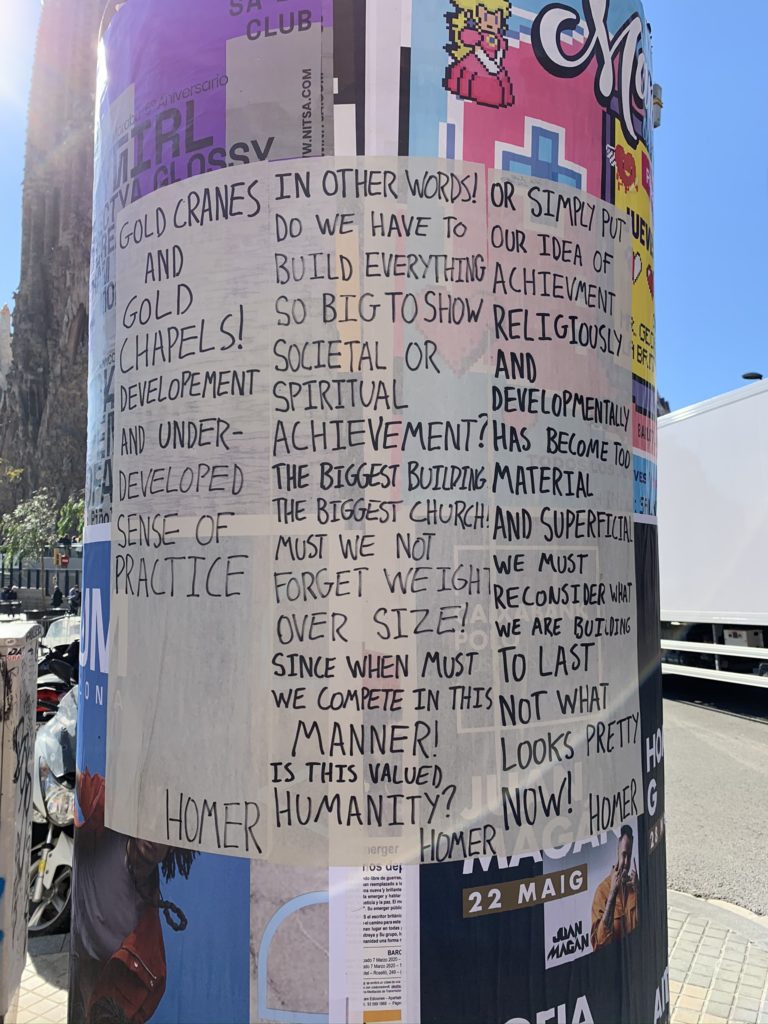
In Gold. Barcelona, Spain January 2020.
Courtesy of the artist.
Cosa pensi della street art? A volte è difficile distinguere il confine con il vandalismo. Per me, la cosa essenziale della street art è che si prende qualcosa e si fa uno sforzo per metterla direttamente davanti agli occhi delle persone. È come una voce che vuole comunicare per condividere qualcosa, un messaggio. Nella street art la cosa più importante è che sta di fronte alle persone. Questa cosa è davvero potente. Il punto è, soprattutto adesso, come comunicare fra di noi, e non solo nei musei. Il gesso per me è un modo per toccare le persone senza scombussolarle. Può essere lavato via se non piace…però è comunque lì.
What do you think about street art? Sometimes it’s difficult to understand the border with vandalism. For me, the thing about the street art is that you’re taking something to making an effort to put something directly to the people. It’s like a voice that convey to share something, a message. In the street art the most important thing it’s that is in front of people. It’s really powerful. The point is, especially now, how to communicate between us, and not only in the museums. Chalk for me is a way to touch people without upsetting them. It can be washed away if they don’t like it…but it’s there.
Ho notato che in questi lavori ti firmi “Homer”. Perché? È un nome d’arte? Sì, è uno pseudonimo che viene dal nome della cittadina in cui sono nato, in Alaska. Mi piace l’idea perché è una cosa che può sembrare strana, e incuriosire le persone a leggere quello che scrivo. Magari anche a porsi delle domande su quello che leggono.
I noticed that in these works you sign “Homer”. Why? It’s an art name? It’s a pseudonym from the town I was born, in Alaska. I liked the idea because it’s something that may seem strange, and I want people to ask questions when they read the writing I do on the walls.
Mi hai parlato dei tuoi pensieri e dell'”impressionismo”. Ma questa è l’arte che produci in questo periodo della tua vita, magari nei prossimi anni farai qualcosa di completamente diverso, non credi? Sì, sicuramente. [ndr. A distanza di solo qualche mese, infatti, i lavori di Hudson Heil sono cambiati. Al momento si sta concentrando soprattutto sulla scrittura e sulla street art, partendo da una riflessione sui concetti che aveva precedentemente trattato nei suoi disegni. Di recente mi ha detto che adesso sta lavorando su queste idee e sta cercando di trovare un modo per unire le due forme espressive.]
You told me about your thoughts and impressionism. But this is your art in this period of your life, maybe in the next years you’ll do a completely different art, don’t you think? Yeah, sure. [ed. After only a few months, in fact, Hudson Heil’s works have changed. At the moment he is focusing on writing and street art, starting from a reflection on the concepts he had previously covered in his drawings. He recently told me that he is now working on these ideas and trying to find a way to combine the two expressive forms.]
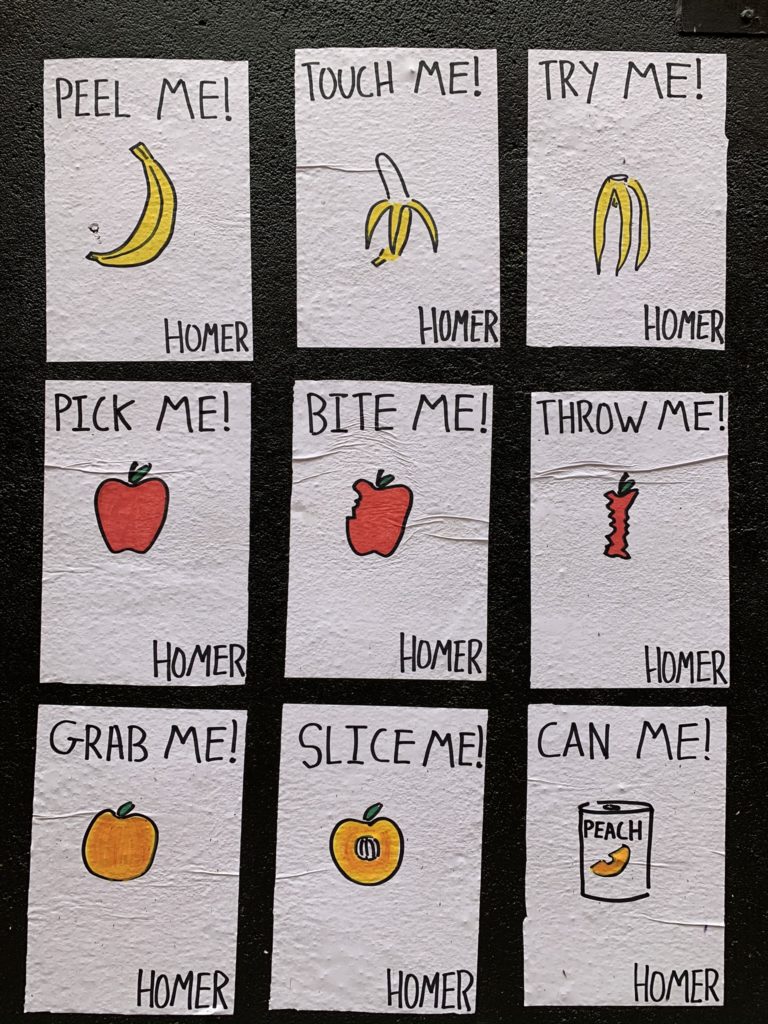
Fruits. Barcelona, Spain February 2020.
Courtesy of the artist.
Cosa ti auguri per i tuoi lavori? Per il futuro della tua arte? Quello che voglio davvero è fare delle esperienze tramite i miei viaggi, e poi tornato a casa voglio prendere quelle esperienze ed usarle. Credo che alcune emozioni siano universali: siamo tutti umani, in una visione ampia del mondo abbiamo tutti le stesse emozioni, gli stessi desideri. Mi rende molto felice fare una determinata impressione a qualcun altro. Mi piacerebbe molto fare delle esposizioni delle mie opere.
And what do you wish for your paintings? For the future of your art? What I really want is to do some experiences by travelling, and then back home I want to take my own experiences and use them. I think that there are some universal emotions: we are all humans, in a larger aspect of the world we have all the same emotions, natural desires. It makes me very happy to have an impression to someone else. I would love to do some exhibitions.
E riguardo i tuoi lavori scritti…scrivi molto per te stesso, e poi scegli qualcosa da mettere sul muro. Come fai questa selezione? E come scegli il posto in cui affiggere le scritte? Ovunque il gesso possa scrivere e la gente possa vederlo. Il processo in cui scelgo cosa scrivere è sempre parte di un’analisi. Le parole che scrivo in particolare…scelgo sempre qualcosa che non tocchi solo me ma che possa riguardare anche altre persone, perché voglio suscitare una riflessione. Scelgo sempre qualcosa di simile alle emozioni di tutti, voglio che le persone si connettano con quello che scrivo.
About your writing works…you write a lot for yourself, and then you choose something to put on the wall. How do you choose? And how do you choose the place? Wherever the chalk can write and people can see it. The process in which I choose the writing itself it’s always part of an analyzation. The particular words I wrote about…I always choose something that don’t touch only me but that can touch other people, because I want to arouse a reflection. I always choose something similar to everyone emotions, I want people to connect with it.
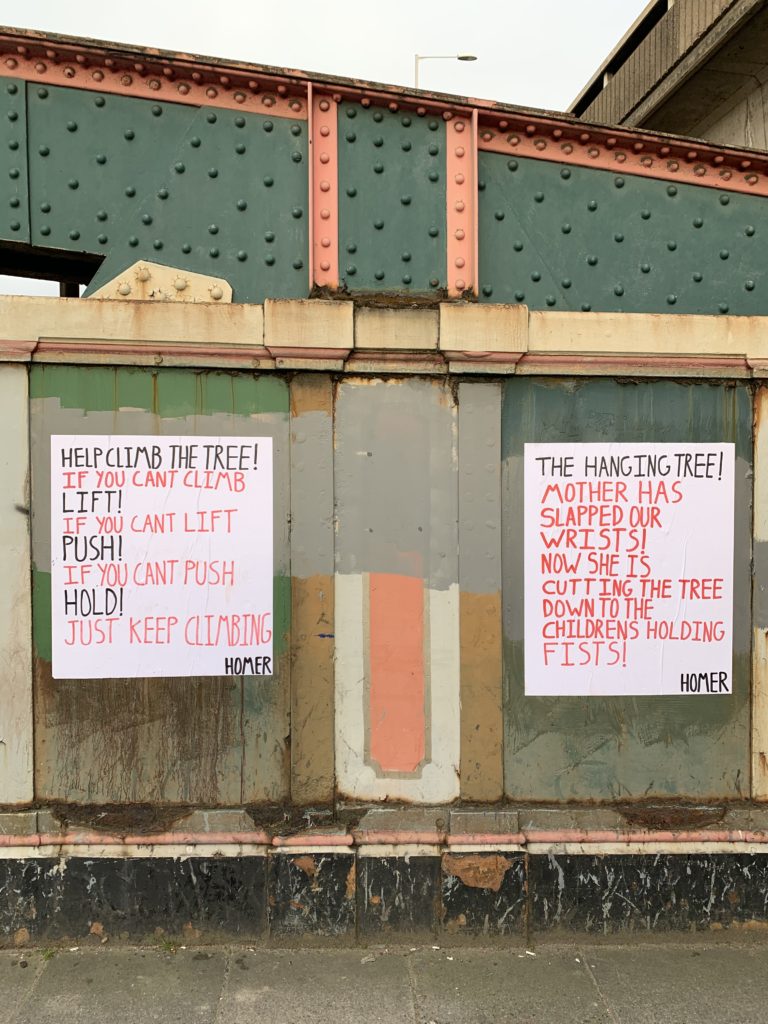
Down The Line. London, England March 2020.
Courtesy of the artist.
Hai scritto qualcosa anche a Firenze? No, qui non l’ho fatto. Ho conosciuto delle persone incredibili e mi sono detto: dovrei scrivere di quest’esperienza o semplicemente vivermela? Ho tutto il tempo per uscire e scrivere, ma adesso voglio godermi il momento. E poi di questi tempi siamo sempre così esposti sui social media, quindi cerco di lasciarli fuori dalla mia vita quando posso.
Did you write something in Florence? No, I didn’t. I met this amazing people and I asked to myself: should I write about this experience or should I just experience it? I have all the time to go out and write, but want to live the moment right here. Also, in this time with social media we have a huge exposure, so now I’m trying to put it out.
Durante questo viaggio, in Italia hai visitato Roma e Firenze. Sono entrambe città importanti per l’arte tradizionale, più che per la contemporanea. Quindi vorrei chiederti: hai trovato qualcosa nell’arte tradizionale che possa esserti utile per il tuo lavoro? Qualcosa che ha cambiato il tuo approccio all’arte? Sì, una delle cose che ho visto ha cambiato l’intenzione di quello che voglio dipingere. Sono stato due volte alla Cappella Sistina. Quando ci sono tornato da solo, la seconda volta, sono rimasto lì dentro per tre ore. In passato ho sempre sentito parlare della Creazione di Adamo, ma quando mi ci sono ritrovato davanti…è una cosa che toglie il fiato! Non avevo mai visto niente del genere prima. Guardando tutti i riquadri, ho notato che danno forma al corpo umano. Questo è semplicemente incredibile. Una delle cose che mi hanno colpito di più è stata la rappresentazione dell’inferno: alcuni elementi della natura possono rappresentare altro, è tutto un parallelismo con l’anatomia umana. Ci sono sempre due significati: è il Giudizio Universale ma è anche un corpo nella sua interezza. Quindi adesso vorrei creare qualcosa su più livelli: il primo è quello che vedi, ma ce ne sono altri. Questa è una cosa che sto sperimentando molto viaggiando: su un piccolo livello pensiamo che le nostre vite siano così diverse (anche in funzione delle diverse culture), ma su un livello più ampio abbiamo tutti bisogno di aria per respirare, di cibo per nutrirci, vogliamo tutti un posto per dormire. È come se vivessimo tutti allo stesso modo, ma al contempo siamo così diversi. Trovare connessioni, costruire punti fra l’arte classica e la contemporanea e qualcosa che mi piacerebbe davvero molto fare.
In this trip, you visited Rome and Florence in Italy. They are both cities important for traditional art, instead of contemporary art. So did you find something, in traditional art, that can be useful for your work? Something that changed your approach to art? Yeah, one of these things that I’ve seen it changed the intention of what I want to paint. I went two times to the Sistine Chapel. When I came back the second time by myself I was there like three hours. In the past I heard people talking about The Creation of Adam, but when I was in front of it…it shakes your breath! It was something that I’ve never seen before. Looking at all the panels, it shapes all the body. That was just unbelivable. One of the things that I think is most incredible is the representation of the hell: some elements of nature can represent something else, it’s all a comparison to human anatomy. There’s always two meanings: it’s The Last Judgement but also a full body. So now I want to create something on different layers: the first is what you see, but there are other layers.This is something I had a big experience on, by travelling: on a microlevel we think our lives are so different (also because of the cultures), but on a larger level we all want air to breathe, we want food to eat, we want a place to sleep. It’s like we are living all the same, but at the same time we are so different. Finding connections, building bridges between classical art and contemporary art it’s something I would really like to do.
Questa è una delle ragioni del tuo viaggio. Sì. Sono nato e cresciuto in una piccola cittadina, e lì ho iniziato a dipingere. Ma in un certo senso è limitante, quindi vedere il mondo e conoscere nuove culture è davvero importante. Poi, dopo questa esperienza, potrò lavorare diversamente.
This is one of the reasons of your trip. Yes. I grown up in a small town, for my entire life, and I painted there. But in some way it’s limiting, so seeing the world and know other cultures is really important. And then, after this experience, I can work differently.
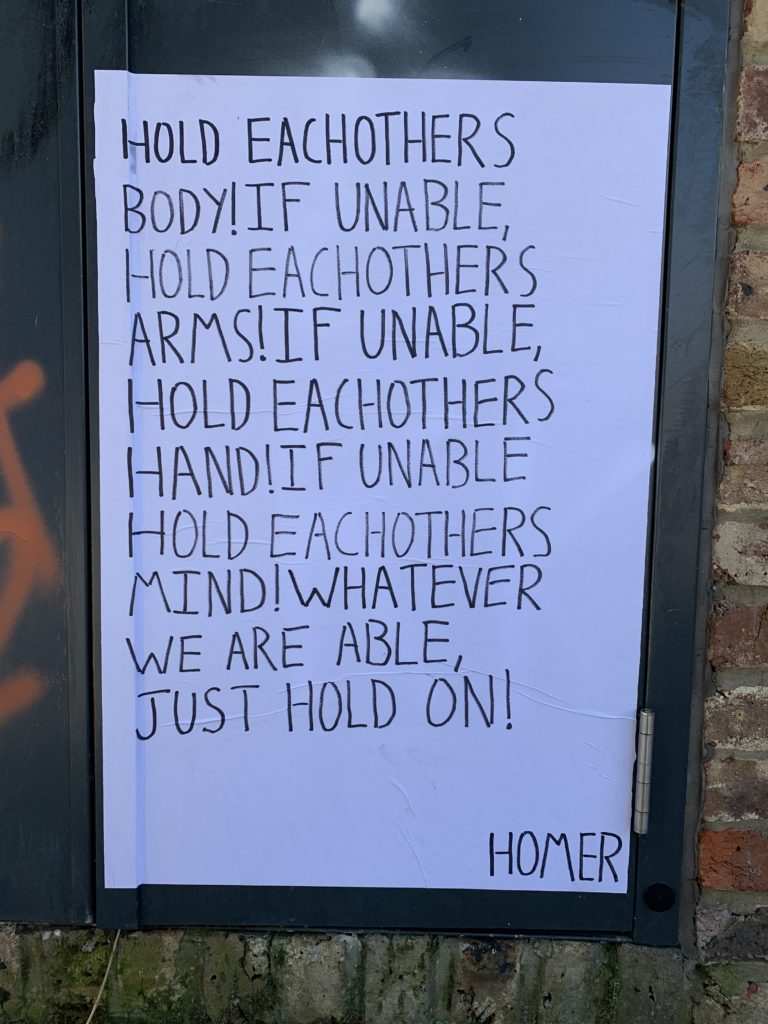
Forward. London, England March 2020.
Courtesy of the artist.
Sei molto giovane e puoi lavorare ancora molto, credo tu possa fare molta strada. Ho molto tempo davanti a me…questo di certo mi aiuta! I progressi che sento di fare…mi caricano. Mi spaventano un po’, ma mi caricano anche.
You’re really young and you can work a lot, so I think you can go a long way. I have a lot of time…this helps! The progresses I feel I made…it excites me. It scares me a little, but it excites me a lot.
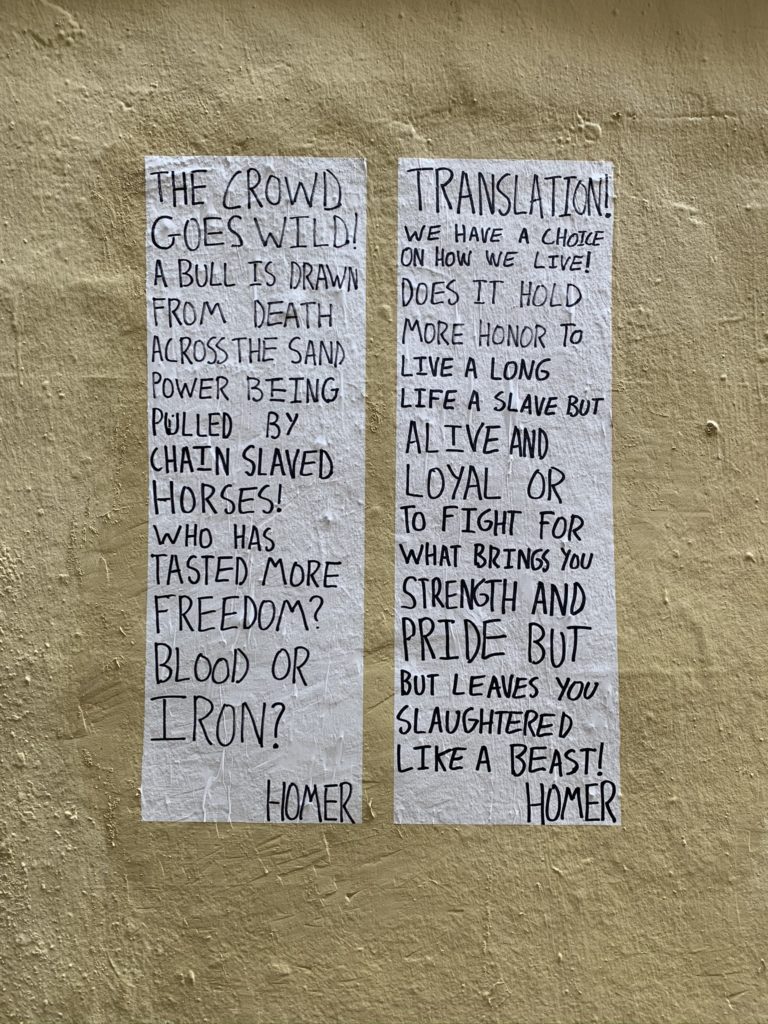
Arena. Barcelona, Spain January 2020.
Courtesy of the artist.
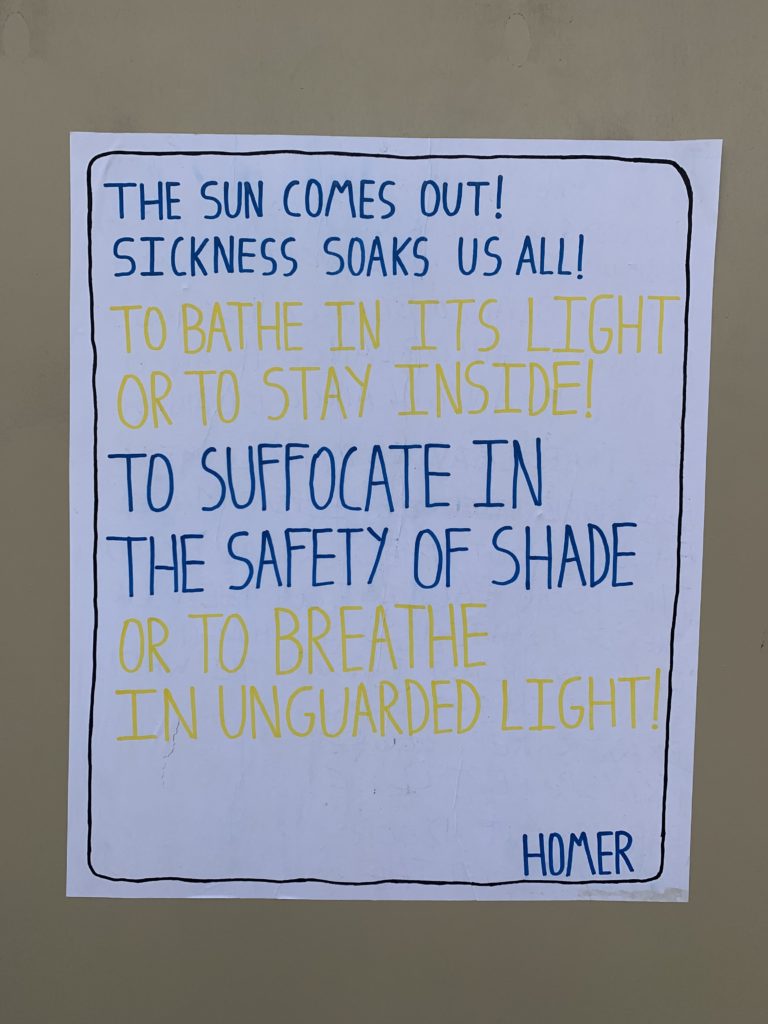
Sunbathing. London, England April 2020.
Courtesy of the artist.
Puoi seguire il lavoro di Hudson…o meglio, di Homer, qui.
You can follow Hudson’s work…or rather Homer’s work here.
3,803


